
5 Tips for Getting the Most from your MVHR System
Part of the Healthy Homes Series
Why MVHR Matters
“Open windows and doors to ventilate your home”, is something repeated frequently with Covid-19 guidelines. MVHR (mechanical ventilation with heat recovery) is an additional method to ventilate a domestic building, but why does it matter?
To maintain a healthy and comfortable living space, airtightness, moisture management, and ventilation need to work holistically for maximum benefit. MVHR is a key element to their effectiveness, particularly if you’re building an energy efficient home.
What is MVHR?
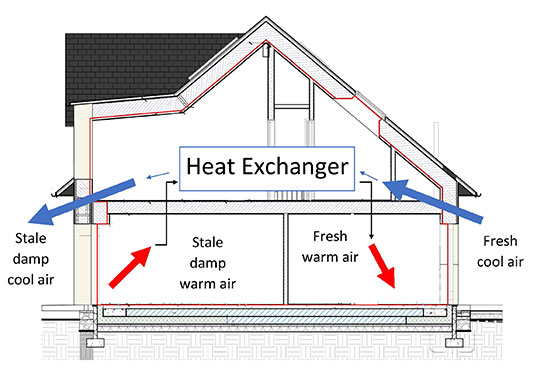
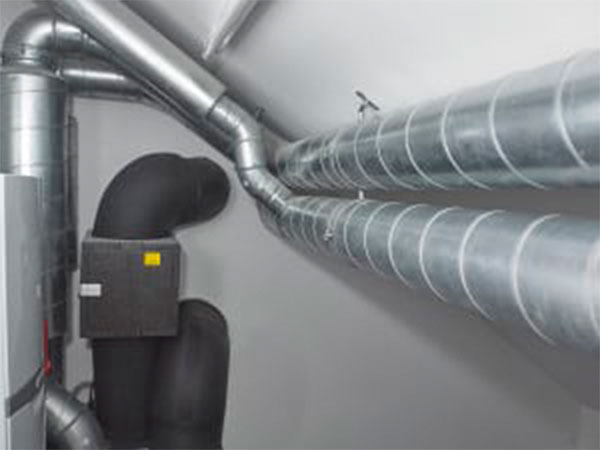
MVHR is very different to the typical intermittent ventilation fans we might be used to in our bathrooms and kitchens. MVHR systems not only extract stale, moist air from rooms but takes it through a honeycomb-like heat recovery unit where it passes – but doesn’t mix with – fresh filtered air from outside.
The heat exchanger recovers and transfers about 90% of heat from the outgoing extracted air into the incoming air, providing pre-heated fresh air to rooms such as bedrooms and living rooms.
MVHR and Airtight Buildings
A new paper by the Passivhaus Trust, The Case for MVHR, suggests that MVHR systems are effective for all buildings with good airtightness levels, whether newbuild or retrofit.
Moisture Control
To achieve airtightness, the building envelope must be sealed (see red line above), but as you increase the level of insulation, moisture control within the structural elements is essential. But what does this mean for a timber frame system?


MVHR and PYC Timber Frame
For airtightness and moisture management, we use high performance MEDITE SMARTPLY airtight boards, proclima intelligent membranes and tapes, and breathable Warmcel insulation. But this is only part of the story and the design.
We also recommend a quality MVHR system. This not only assists in removing interstitial moisture, a natural process for timber frame, but also removes stale, moist air from normal living in a building.
5 Top Tips for Getting
the Most Out of your MVHR


A guest segment by Green Building Store’s Tom Heywood, shares his 5 top tips on getting the most out of your MVHR.
Thanks for the tips Tom, we found them useful and we are sure our readers will too.
1. The importance of good design
The design of the ducting system is just as important, if not more so, than the specification of the MVHR unit itself.
You can go online and buy a cheap MVHR unit and ducting kit, but it will not have been designed specifically for your home.
Ask a designer to check the air flows and the sound levels, room by room, for your home.

2. Design for quiet systems
MVHR systems often get some bad press for being noisy. However, if designed properly, the noise from an MVHR system, should be imperceptible.
The key is to ask your MVHR designer to model the sound levels and check the air valves in the rooms are inaudible. If the system is too loud we would add bigger silencers to the ducting system until it is.
3. Design early
Consider where the unit and ducting for the MVHR system will fit, early in the design. For example, how deep do the floor joists need to be to accommodate the ducting, and is there a space close to an external wall where the unit can be located, such as utility room?
Sam Roberts, Passivhaus Designer at PYC, uses 3D software to model where the MVHR system will be fitted and can check for any clashes with the timber frame structure.
This can save costly changes once the frame has been built.


4. Don't scrimp and save
When self-builders plan their dream home, it is false economy to cut costs on the ventilation system. If the MVHR system goes wrong and boxed in behind plasterboard, or it is in ceilings, floors and walls, any maintenance or replacement will cost.
We recommend spending money on getting the system right in the first place and it should then last the lifetime of the building.
5. No deviation
It is really important that you stick to your MVHR design and installation plan and don’t let your installer ‘go rogue’ changing the plans! An MVHR design is very precise and any changes made should be in consultation with your MVHR design team.
You May Also Find These Interesting
6 Tips for Airtightness & Moisture Management
This PYC blog considers the importance of airtightness and moisture management to the energy efficiency of the building
The Case for MVHR
A report by the Passivhaus Trust, suggesting that MVHR systems are desirable in nearly all domestic situations, either newbuild or retrofit.
Green Building Store & MVHR
For more information on Green Building Store and their excellent MVHR service.
Sign Up to Our Newsletter
Click to subscribe to updates and
stay in touch with our news, blogs
and resources on sustainable and Passivhaus building.